
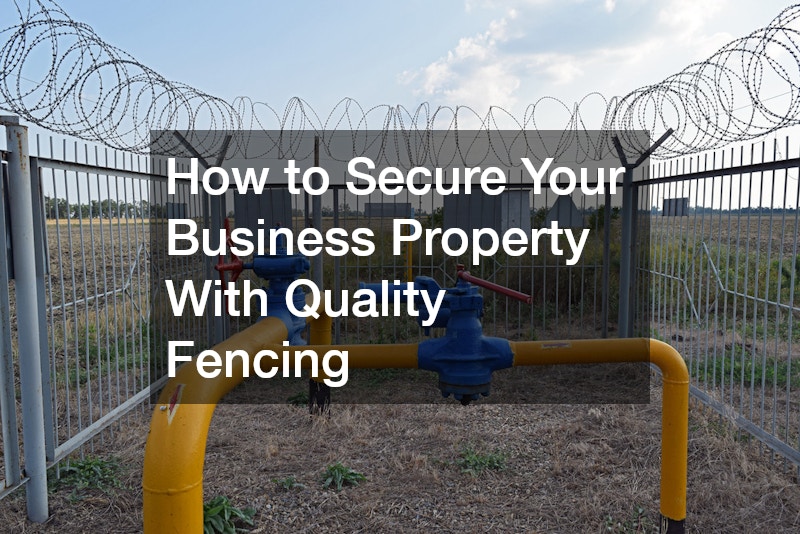
As a business owner, safeguarding your assets, employees, and physical property is a constant priority that often brings a significant amount of stress. You invest heavily in inventory, specialized equipment, and creating a safe workspace for your team. While it is common practice to install surveillance cameras, motion-sensor lighting, and complex indoor alarm systems, these measures are inherently reactive. A camera will give you an excellent, high-definition recording of a crime taking place, and an alarm will alert the authorities that a breach has already occurred. However, neither of these tools physically stops an unauthorized individual from walking onto your premises in the first place.
To truly secure your facility, you need a proactive, physical deterrent. A well-planned, high-quality perimeter barrier is the first and most crucial line of defense in your security ecosystem. It sets a definitive boundary, funnels traffic to designated areas, and forces potential intruders to reconsider their target.
This comprehensive guide will walk you through the entire process of fortifying your business exterior. We will cover how to conduct a realistic threat assessment, select the appropriate materials for your specific industry, establish efficient access control, manage the construction process, and maintain your investment for decades to come.
Conduct a Comprehensive Perimeter Threat Assessment
Before purchasing materials or hiring a crew, you must understand exactly what you are trying to protect and the unique vulnerabilities of your specific location. A barrier is only as strong as its weakest point, and failing to properly assess your environment can render your investment useless.
Identify Your Property’s Most Vulnerable Blind Spots
Every property has areas that are naturally harder to monitor. These blind spots are exactly where opportunists look to make entry. You must walk your entire property line—preferably once during the day and once at night—to view your facility from an outsider’s perspective.
-
Evaluate Landscaping: Overgrown shrubs, low-hanging tree branches, and dense foliage can easily hide a person from both street view and your security cameras. Clear away vegetation that creates hiding spots near your property line.
-
Check Lighting: Pay attention to areas where shadows pool heavily at night. The rear of the building, alleyways, and spaces behind dumpsters are notorious for poor visibility.
-
Analyze Traffic Patterns: Note where foot traffic naturally flows around your property. Are people cutting across your lawn to reach a neighboring street?
By understanding these vulnerabilities, you can see how implementing the right commercial fencing acts as a psychological deterrent. When an intruder sees a fortified boundary eliminating their favorite blind spots, it signals that the property is actively managed and difficult to breach, significantly lowering the chance of a crime of opportunity.
Evaluate Local Zoning Laws and District Regulations Before Planning
Security cannot come at the expense of legality. Every municipality has strict codes governing what can and cannot be built on a property line. Ignoring these regulations can result in heavy fines and a mandate to tear down the structure at your own expense.
-
Height Restrictions: Most cities restrict barrier heights. For instance, you might be allowed an eight-foot barrier in the rear of an industrial lot, but only a four-foot barrier in the front yard to maintain line-of-sight for drivers.
-
Setback Requirements: You rarely can build exactly on the property line. Setbacks dictate how far back from the street, sidewalk, or neighboring property your structure must be.
-
Material Bans: Certain districts, especially commercial zones near residential areas, may ban the use of barbed wire, razor ribbon, or electrified elements.
Navigating municipal permitting, arranging for official property line surveys, and interpreting complex zoning laws can be overwhelming. It is highly advisable to consult with professionals who offer comprehensive fence services to help you navigate these bureaucratic hurdles, ensuring your design is fully compliant before a single hole is dug.

Match Your Security Goals to the Right Materials
Once you understand your vulnerabilities and legal constraints, the next step is selecting the material. There is no one-size-fits-all solution; the ideal material depends entirely on the nature of your business, your budget, and the level of security required.
Maximize Visibility and Deterrence for Industrial Lots
For warehouses, manufacturing plants, equipment rental yards, and heavy industrial sites, function always takes precedence over form. The primary goal is to keep high-value assets securely locked away while allowing security personnel and cameras to maintain a clear line of sight through the barrier.
-
The Visibility Factor: Solid walls provide privacy, but they also give intruders a place to hide once they make it over. A see-through barrier allows passing police patrols and your own security team to see exactly what is happening inside the lot.
-
Durability in Harsh Environments: Industrial properties often feature heavy machinery, delivery trucks, and harsh operating conditions. You need a material that can take a beating and remain structurally sound.
For these applications, installing a heavy-duty chain link fence paired with appropriate security enhancements is highly effective. It is incredibly strong, offers complete visibility, and is cost-effective for securing massive perimeters. To upgrade its security, the top can be fitted with angled arms to hold tension wire, barbed wire, or privacy slats to obscure high-target inventory from the street without completely blocking airflow or light.
Balance Aesthetics with Anti-Climb Features for Office Parks
If your business is a corporate headquarters, a medical facility, or an upscale retail plaza, a purely utilitarian, industrial look might negatively impact your brand image. You need to secure the premises without making your facility look like a correctional institution.
-
Curb Appeal Matters: Clients, patients, and employees should feel welcomed and safe, not intimidated. The perimeter should complement the architecture of your building and the surrounding landscaping.
-
Inherent Security Design: You can achieve high security through smart design. Smooth vertical pickets, tightly spaced horizontal rails, and an absence of footholds make scaling incredibly difficult.
For these environments, investing in a professional aluminum fence installation provides the perfect balance. Aluminum offers rust-proof durability, which is essential for long-term aesthetics, and can be customized with spear-topped anti-climb designs. It provides a sleek, authoritative, yet elegant boundary that clearly delineates your property while maintaining an inviting corporate appearance.
Establish Strict Access Control Points
A perimeter barrier is essentially useless if the entry and exit points are compromised. Your gates are the moving parts of your security system, experiencing the most wear and tear and representing the most obvious target for unauthorized entry. Planning your access control requires balancing airtight security with operational efficiency.
Automate Employee and Delivery Entrances for Efficient Traffic Flow
Manual entryways create massive bottlenecks. If an employee has to get out of their car in the rain to unlock a padlock, swing a heavy barrier open, drive through, and then get out again to lock it behind them, your operational efficiency plummets. Worse, human nature dictates that during busy hours, people will simply leave it open for convenience, completely defeating your security efforts.
-
Assess Traffic Volume: Determine how many vehicles enter and exit during peak hours. This dictates the speed and duty cycle required for your gate motors.
-
Choose the Right Movement: Slide models are excellent for properties with limited space swinging inward, provided there is enough horizontal space along the fence line. Swing models are traditional but require a large, clear arc to operate safely. Cantilever models, which slide without touching the ground, are ideal for snowy or debris-heavy environments.
To avoid these bottlenecks and secure the perimeter effortlessly, utilizing robust commercial gates can be integrated with heavy-duty automated sliding or swinging mechanisms. These systems are rated for continuous, high-cycle use, ensuring they keep unauthorized vehicles out while letting your fleet and scheduled deliveries pass through without a second thought.
Integrate Keypads and Card Readers to Track Visitor Movement
Automation solves the physical labor of opening the entryway, but you still need to control who triggers that automation. A simple remote clicker handed out to 50 employees is a massive security risk, as clickers can be lost, stolen, or copied. Modern access control bridges the gap between physical boundaries and digital tracking.
-
Digital Access Methods: Implementing RFID proximity readers, PIN code keypads, or even biometric scanners allows you to restrict entry to authorized personnel only.
-
Audit Trails: Digital systems log every entry and exit. If an incident occurs on site over the weekend, you can instantly pull a report to see exactly whose credentials were used to access the property.
-
Visitor Management: Temporary PIN codes can be generated for delivery drivers or contractors, set to expire automatically after their scheduled window.
Because these systems involve complex wiring, low-voltage power supplies, and critical safety mechanisms like photo-eyes and vehicle detection loops, you should not attempt to wire them yourself. It is crucial to be contracting specialized driveway gate services to ensure the motorized operators and digital access control panels are installed correctly, communicate flawlessly, and feature fail-safes so you are not locked out during a power outage.
Vet and Supervise the Construction Phase
The physical installation is where your planning meets reality. A poorly constructed barrier will sag, lean, and ultimately fail, leaving your property exposed and your budget drained. Actively managing the construction phase and vetting your builders is just as important as choosing the materials.
Demand Clear Timelines and Utility Line Checks Prior to Groundbreaking
Construction inevitably causes some level of operational downtime or disruption to your daily business activities. Parking lots may need to be partially closed, and noise might disrupt your office. Managing this requires clear communication and rigorous safety protocols before the first shovel hits the dirt.
-
Establish a Schedule: Require a firm start date, a projected end date, and an explanation of how the crew will secure the site overnight if the old boundary is torn down before the new one is fully up.
-
Prioritize Safety and Infrastructure: Striking an underground utility line is catastrophic. It can cause explosions, electrocution, massive fines, and shut down the internet or water to your entire city block.
Never allow a crew to dig without absolute certainty of what lies beneath the surface. Partnering with a reputable local fencing company ensures that critical, legally mandated steps—such as calling the 811 “Dig Safe” hotline to mark all public underground utilities—are completed thoroughly and officially documented before ground is broken.
Verify Insurance, Licensing, and Deep-Set Footing Protocols
Do not assume that every contractor offering a low bid operates legally or to structural standards. The physical integrity of your barrier relies entirely on what you cannot see: the underground footings.
-
Check Credentials: Request physical copies of their liability insurance and workers’ compensation policies. If an uninsured worker is injured on your property, your business could be held liable.
-
Ask About Concrete and Depth: How deep are they digging the holes? What type of concrete mix are they using? How are they managing water runoff around the posts?
-
Understand Frost Lines: In colder climates, the ground freezes and expands. If the concrete footing does not extend below this frost line, the expanding earth will push the post out of the ground—a phenomenon known as frost heave.
Ensure your builders are completely transparent about their engineering specs. Long-lasting, proper fencing installation relies on setting the structural posts deep beneath the frost line in bell-shaped concrete footings, guaranteeing the structure will not succumb to high winds, shifting soil, or harsh winters.
Implement a Routine Perimeter Inspection Schedule
Your perimeter defense is not a “set it and forget it” asset. It is exposed to UV radiation, torrential rain, snow, vehicular bumps, and general wear and tear 24 hours a day, 365 days a year. To protect your investment and maintain your security posture, routine maintenance is non-negotiable.
Look for Rust, Ground Shifts, and Loose Hardware Seasonally
Create a standardized bi-annual inspection checklist. Assign this task to your facilities manager or take the time to do it yourself in the spring and the fall. Catching small issues early is the key to cost-effective property management.
-
Inspect the Hardware: Check every hinge, latch, and drop rod. Are the bolts tight? Do the hinges need lubrication? A loose hinge can cause a massive access point to misalign and fail to latch properly.
-
Check the Ground: Walk the line looking for soil erosion around the concrete footings. Look for any posts that appear to be leaning, which indicates a failing foundation.
-
Examine the Material: Look for chipped powder coating or exposed metal. Rust spreads like a cancer; a small spot must be sanded and touched up immediately before it compromises the structural integrity of the metal.
By being proactive, you save money. Addressing minor fence repairs immediately—like tightening a sagging hinge, fixing a cut tension wire, or touching up a scratch—prevents small vulnerabilities from snowballing into larger, highly expensive security breaches or complete structural replacements down the road.
Establish a Relationship with a Maintenance Professional
While your facilities team can handle visual inspections and basic lubrication, complex structural issues and automated access control problems require professional intervention. Attempting DIY fixes on heavy-duty commercial equipment is a massive liability.
-
Warranty Voidance: Tinkering with automated motors or structural welding can instantly void your manufacturer warranties.
-
Safety Risks: Industrial gates are incredibly heavy and operate under immense tension and electrical power. Mishandling them can result in severe injury or property damage.
-
Emergency Response: When a delivery truck accidentally backs into your perimeter at 2:00 AM, leaving your warehouse exposed, you do not want to be desperately searching the internet for a reliable company.
For the longevity of your security infrastructure, it is best to avoid in-house tinkering. Instead, suggest keeping a trusted local fence contractor on speed dial for scheduled annual tune-ups of your automated systems and for immediate, reliable emergency fixes following severe storms, vandalism, or vehicular accidents.
Conclusion
Securing your business property is not just about keeping bad actors out; it is a foundational investment in your company’s operational continuity, the safety of your workforce, and the protection of your hard-earned assets. A robust physical boundary acts as the anchor for all your other security measures, providing a definitive, unyielding line of defense.
Remember that security is a comprehensive ecosystem. A physical barrier works best when combined with strategic lighting, clear sightlines, and smart access control. By taking the time to assess your specific vulnerabilities, choosing the right materials, vetting your builders, and committing to ongoing maintenance, you transform your property from an easy target into a fortified, highly unattractive option for any opportunist.
