
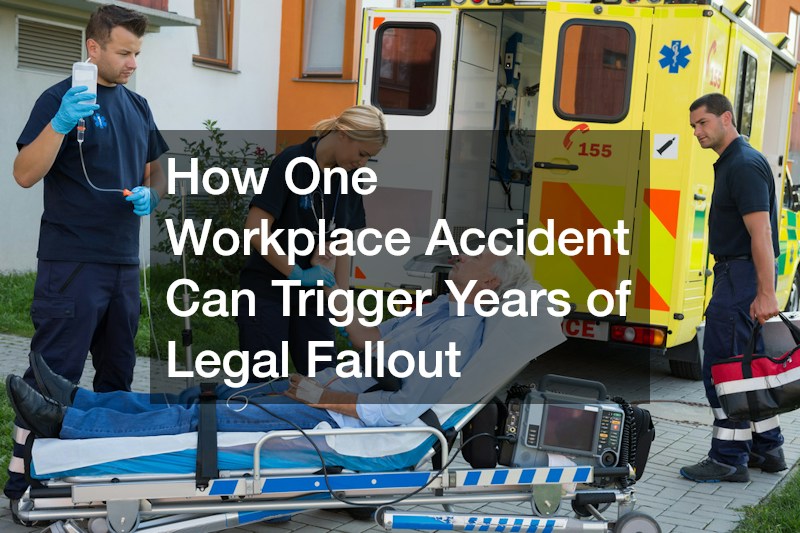
A single moment on a job site can change the course of your life for years to come. Beyond the immediate pain and medical bills, a workplace accident often sets off a chain reaction involving insurance claims, legal disputes, lost income, and sometimes even criminal questions that nobody expects to face. Understanding how these pieces fit together can help you protect your health, your paycheck, and your future. This article walks through the most common legal and financial dominoes that fall after an on-the-job injury.
The First 48 Hours After an On-the-Job Injury
What you do immediately after getting hurt at work has a lasting impact on every claim that follows. Reporting the injury to a supervisor right away creates a paper trail that insurance companies and courts will later scrutinize closely. Seeking medical attention quickly not only protects your health but also documents the injury in a way that is hard to dispute later. Waiting even a few days to report an injury can give an employer or insurer grounds to question whether the accident actually happened at work.
- Notify your supervisor or HR department the same day, in writing if possible
- Request copies of any incident report filed
- Take photos of the scene, equipment, or hazard involved
- Get a full medical evaluation even if injuries seem minor
- Keep a personal journal of symptoms and missed workdays
Medical Bills, Lost Wages, and the Workers Compensation Claims Process

Most workplace injuries are handled through the workers compensation system, which is designed to cover medical costs and a portion of lost wages without requiring you to prove fault. The process sounds straightforward on paper, but claims are frequently delayed, underpaid, or denied outright based on technicalities. This is often the point where injured employees first consult workers compensation lawyers, since insurers sometimes dispute the severity of an injury or argue it was not work-related at all. An experienced advocate can help gather medical documentation and push back against lowball settlement offers before a claim is finalized.
The financial strain of a denied or delayed claim can ripple outward quickly, affecting rent, groceries, and family obligations. Many workers do not realize that appealing a denial has strict deadlines, and missing them can permanently forfeit benefits. Understanding your state’s specific rules around reporting windows and appeal timelines is essential to avoiding a costly mistake.
When a Workplace Accident Leads to a Personal Injury Lawsuit
Not every workplace injury stays confined to the workers compensation system. If a third party, such as a contractor, equipment manufacturer, or property owner, contributed to the accident, an injured worker may be able to file a separate personal injury lawsuit. These cases can run parallel to a workers compensation claim and often result in significantly higher compensation for pain, suffering, and long-term damages. Pursuing both avenues at once requires careful coordination so that benefits from one claim do not reduce recovery from the other.
- Defective machinery or tools may point to manufacturer liability
- Unsafe conditions on a client’s property can involve premises liability
- Negligent subcontractors may share responsibility for an accident
- Vehicle accidents during work duties may involve a separate driver’s insurance
How Drug Testing After an Accident Can Create Unexpected Legal Trouble
Many employers require a drug test immediately following a workplace accident, and the results can complicate an otherwise straightforward injury claim. A positive test does not automatically disqualify someone from workers compensation benefits, but it can give insurers a reason to fight the claim aggressively. In some states, a positive result combined with evidence of impairment can even lead to marijuana charges if the substance was used or possessed on company property, particularly in industries with strict safety regulations. Workers facing this situation often need both an employment-focused advocate and a criminal defense attorney to address the overlapping legal issues.
It helps to understand that workplace drug policies vary widely depending on the state and the industry, especially as marijuana laws continue to shift across the country. An injury claim can become tangled in unrelated legal proceedings if these questions are not addressed early and separately. Keeping clear documentation of prescriptions and medical marijuana authorizations, where applicable, can prevent misunderstandings from escalating.
Long-Term Disability and the Social Security Disability Process
When an injury results in permanent limitations, workers compensation benefits often run out long before the ability to earn a full income returns. In these situations, many injured workers turn to the Social Security Administration for long-term disability support, which involves an entirely separate application process with its own medical standards and paperwork requirements. Because approval rates for first-time applicants are notoriously low, many people choose to work with social security attorneys who understand how to present medical evidence in the way the system expects. This step often becomes necessary years after the original accident, once it becomes clear that a full recovery is not realistic.
- Initial disability applications are frequently denied on first submission
- Appeals can take many months or even years to resolve
- Medical records must clearly link the disability to an inability to work
- Combining workers compensation and disability benefits requires careful calculation to avoid offsets
Protecting Yourself from Years of Legal and Financial Fallout
The best defense against a drawn-out legal battle is organization from the very start. Keeping every medical record, pay stub, correspondence, and incident report in one place makes it far easier to respond to challenges as they arise. Many of the cases that stretch on for years do so because of gaps in documentation or missed deadlines rather than the complexity of the injury itself.
Seeking guidance early, rather than waiting until a claim is denied or a dispute escalates, often shortens the overall timeline significantly. Even a single consultation can clarify which parts of the process apply to your specific situation.
A workplace accident rarely ends when the physical wound heals, and the legal and financial consequences can stretch on for years if not handled carefully from the start. Taking prompt action, documenting everything, and seeking the right professional guidance at each stage can make the difference between a manageable recovery and a prolonged legal struggle. If you or someone you know is navigating the aftermath of a workplace injury, treat the first few weeks as the most important window to get informed and get organized.
