

Building a custom home is likely the single largest financial and emotional investment you will ever make. It represents the culmination of years of saving, dreaming, and meticulous planning. For many, it is the realization of a lifelong goal: a space perfectly tailored to your family’s needs, habits, and aesthetic preferences. However, the gap between the dream in your head and the reality of a finished structure is vast, and the bridge across that gap is built by people. It is not the lumber, the glass, or the concrete that ultimately determines the success of your project; it is the skill, integrity, and communication of the professionals handling them.
Many people enter the construction process with a focus solely on the “what”—the floor plan, the fixtures, the paint colors, and the architectural style. They often neglect the “who.” This oversight is the primary driver of the construction horror stories we all hear: budgets that balloon out of control, timelines that stretch years beyond the deadline, and quality issues that plague the owners for decades. When you act as the owner-builder or the primary decision-maker for a custom project, you are essentially stepping into the role of CEO for a temporary company. Your primary job is recruitment.
This guide is designed to be your comprehensive recruitment manual. It breaks down the hiring process chronologically and by trade, explaining exactly who you need, why you need them, and how to vet them. We will move from the initial planning stages through the heavy construction and into the final finishing touches. By the end of this article, you will have a roadmap for assembling a team that works in harmony to deliver your vision on time and on budget.
Phase 1: The Visionaries – Planning and Architecture

Start with a Professional Who Can Translate Your Dreams into Blueprints
Before you purchase a single piece of lumber or break ground, you need a plan. This seems obvious, but the quality and detail of that plan dictate the smoothness of the entire build. In the world of custom construction, ambiguity is expensive. If a drawing is unclear, the builder will have to guess, and if they guess wrong, you pay for the correction. This is why your first and most critical hire is the person who will put your vision on paper.
The Role of the Design Lead
You might assume any architect can handle a house, but residential custom design is a specific niche. Hiring a dedicated custom home designer is often preferable to a generalist architect who spends most of their time on commercial strip malls or office parks. A specialist understands the nuances of daily living—how a family moves from the garage to the kitchen with groceries, how morning light hits the master bedroom, and how to maximize privacy on a specific lot. They are not just drawing walls; they are designing a lifestyle.
When you interview candidates for this role, you are looking for a listener. You want someone who asks about your habits, your future plans, and your pet peeves about your current living situation. They need to be able to take abstract concepts like “cozy but open” and translate them into hard lines and dimensions. A good designer will also challenge you. If you ask for a feature that will blow your budget or ruin the flow of the house, they should have the confidence to tell you so and offer alternatives.
The Mindset Shift
It is crucial to understand that building a custom home requires a completely different mindset than purchasing an existing property. Most home buyers are accustomed to walking into a space and deciding if they can live with its flaws. They might say, “I wish the closet were bigger, but the location is great, so we will take it.” In custom building, you do not have the luxury of compromise; you have the burden of decision. You must decide every detail, from the width of the hallways to the swing direction of every door.
Your design lead is your guide through this decision fatigue. They help you prioritize where to spend your budget for maximum impact and where to pull back. They act as the filter for your ideas, telling you which ones are feasible and which ones will create structural or financial conflicts. This relationship is often long-term, spanning several months of revisions, so personality fit is just as important as technical skill.
Vetting Your Design Partner
When evaluating potential partners for the design phase, look deeper than just a glossy website. You need to verify their technical competence and their ability to collaborate.
- Check for Regulatory Knowledge: Do they understand local zoning laws, setback requirements, and height restrictions? A beautiful design is useless if the city won’t issue a permit for it because it violates a local ordinance.
- Ask About Collaboration: Meaningful design doesn’t happen in a vacuum. Ask them how they work with builders. Do they welcome feedback from the construction team, or are they rigid about their vision? The best projects happen when the designer and builder collaborate early to solve constructability issues before they become expensive problems.
- Review “Before and After” Scenarios: Ask to see a project where the client had a difficult lot or a tight budget, and ask how they solved those problems. Creativity is best demonstrated through constraints.
Phase 2: The Envelope – Siding and Exterior Protection
Selecting Materials and Pros for Long-Term Durability
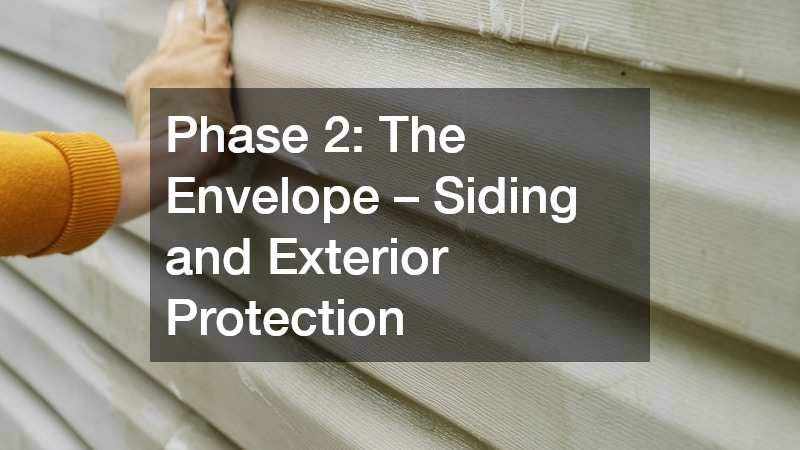
Once the foundation is poured and the framing is up, the race is on to get the building “dried in.” The exterior envelope is your home’s skin. It protects the structural integrity of the wood frame from rain, snow, wind, and sun. If this layer fails, everything inside—insulation, drywall, flooring—is at risk. This phase requires professionals who understand the science of water management.
Why Specialization Matters
In the past, a general carpenter might have installed the windows, siding, and trim. Today, material technology has advanced to the point where you need a specialized siding contractor. Modern exterior systems are complex. They involve specific moisture barriers, rain screens, and flashing tapes that must be installed in a precise order to channel water away from the walls.
A generalist might install the siding so it looks good on day one, but a specialist knows that water is patient and relentless. If the flashing around a window is done incorrectly, water will eventually find its way behind the siding, causing rot that might not be discovered for years. By the time you see the mold on your interior drywall, the structural damage is already done. This is particularly true for modern materials like fiber cement or engineered wood, which require specific nailing patterns and gap tolerances to perform correctly.
Investing in Longevity
The choice of materials and the quality of installation are inextricably linked. Whether you choose vinyl, fiber cement, engineered wood, or cedar, the goal is to install it once and forget about it. Many homeowners try to save money on the exterior to splurge on the kitchen, only to face a full house siding replacement ten years later because of poor installation or low-grade materials. This is a financial disaster. It is far cheaper to pay for a premium installation upfront than to pay for removal, remediation, and re-installation a decade later.
When you are interviewing pros for the exterior, focus on their warranty and their understanding of the local climate. A home built in a humid coastal environment has different needs than one built in an arid desert. The contractor should be able to explain exactly how their installation method protects against the specific threats in your area, be it salt spray, intense UV radiation, or freeze-thaw cycles.
Key Considerations for the Exterior Team
- Warranty Alignment: Ensure the installer is certified by the material manufacturer. Many top-tier siding manufacturers offer 30 or 50-year warranties, but these are often voided if the installer fails to follow the user manual to the letter. A certified pro ensures your warranty remains valid.
- Detail Work: Pay attention to the details in their portfolio. Look at how the siding meets the roofline, how it butts up against stonework, and how corners are handled. These transition points are where leaks happen.
- Moisture Management: Ask the potential contractor specifically about their waterproofing strategy. If they don’t have a clear answer about house wrap, taping seams, or window flashing, keep looking.
Phase 3: The Nervous System – Wiring and Risk Management

Powering Your Home Safely and Protecting Your Assets
While the exterior protects the structure, the internal systems bring it to life. The “rough-in” stage is when the plumbing, HVAC, and electrical systems are installed inside the open walls. This is a critical phase because once the drywall goes up, fixing mistakes becomes exponentially more expensive and messy. It is also the phase where safety is paramount.
The Electrical Backbone
Of all the trades, the residential electrician perhaps has the most influence on the future-proofing of your home. Electrical codes are constantly updating, and our demand for power is only increasing. Twenty years ago, no one was thinking about charging a car in the garage or powering a server rack in the basement. Today, these are standard requests.
You need a professional who thinks beyond the minimum code requirements. A forward-thinking electrician will ask you about your lifestyle. Do you plan to install a hot tub later? Do you want automated blinds? Do you need floor outlets for a floating sofa arrangement? They should be suggesting conduit runs for future expansion so that if technology changes, you can pull new wires without tearing open the ceiling. Furthermore, lighting design is an art form. A commercial electrician used to lighting warehouses might simply put a grid of bright cans in the ceiling. A residential specialist understands layers of light—ambient, task, and accent—and how to switch them effectively to create mood and functionality.
Financial Safety Nets
As the build progresses, the value of the property skyrockets. You are no longer just insuring a plot of land; you are insuring a partially built asset filled with expensive materials. This is where a conversation about homeowners insurance becomes vital. Standard policies often do not cover homes under construction. You will likely need a specific “Builder’s Risk” policy that covers theft of materials, fire during construction, and liability if a worker gets injured.
Once the home is finished, the transition to a permanent policy must be seamless. Custom homes often have unique features—metal roofs, custom woodwork, imported tiles—that standard replacement cost calculators might undervalue. You must ensure your policy reflects the true cost to rebuild the home with the same level of craftsmanship, not just “builder grade” standards. Engaging with a homeowners insurance agent early can also save you money; they can advise you on how certain safety features, like monitored alarms or fire suppression systems, can lower your long-term premiums.
Red Flags During the Systems Phase
- The “We’ll Figure It Out Later” Attitude: If an electrician or plumber puts off decisions until trim-out, it’s a warning sign. Rough-in is when the precise location of every switch and fixture must be determined.
- Messy Cabling: Even behind walls, wiring should be neat, organized, and properly stapled. A “rat’s nest” of wires in the panel usually indicates sloppy thinking and potential safety hazards.
- Lack of Low-Voltage Planning: If they aren’t asking about internet (Cat6), cable, or security wiring, they are missing a huge part of modern home functionality.
Phase 4: Hardscaping – Foundations and Features
Creating Structural Beauty with Stone and Concrete
As the house nears completion, attention often shifts to the “hardscaping”—the permanent features of the landscape. This includes driveways, walkways, patios, retaining walls, and outdoor kitchens. These elements anchor the house to the ground and provide the transition between the built environment and nature. They require a different set of skills than framing or interior work.
The Art of Concrete
Concrete is often viewed as a purely utilitarian material, something to be covered up or ignored. However, in the hands of a skilled decorative concrete contractor, it becomes a design feature. Modern techniques allow concrete to mimic slate, flagstone, or even wood planks. Through stamping, acid staining, and polishing, concrete can provide a high-end look at a fraction of the cost of natural stone.
This is not a job for a standard foundation crew. Decorative work requires a sense of timing and artistry. The contractor must know exactly when to apply the stamp mats—too wet and the impression is undefined; too dry and it won’t take. They must understand color theory to mix release agents and stains that create natural-looking variegation rather than artificial blotches. When vetting these pros, ask to see physical samples or visit a previous job site. Photos can be edited, but the physical texture of a stamped patio tells the true story.
The Timelessness of Masonry
For features that require genuine weight and permanence, nothing beats stone and brick. Masonry contractors are the sculptors of the construction world. Whether you are cladding the front of the house in fieldstone, building a brick chimney, or creating a dry-stack stone wall in the garden, the mason’s skill determines whether the result looks like a pile of rocks or a work of art.
Masonry is also crucial for durability in high-wear areas. A well-built masonry fireplace or retaining wall will last for centuries with little maintenance. When vetting these pros, look for consistency in their mortar joints and the “randomness” of their stone patterns. The human eye is good at spotting patterns; a bad mason will accidentally create repetitive lines or “zippers” in the stone layout that look unnatural. You should also inquire about their sourcing. Local stone often looks more natural in the landscape and costs less to transport than imported varieties.
Coordination is Key
Both concrete and masonry work are messy and heavy. They require large mixers, piles of sand, and pallets of stone.
- Site Access: Ensure these contractors are scheduled when the driveway is accessible, but before the final grading of the soil. Heavy trucks can ruin finished landscaping.
- Weather Watch: Both trades are weather-dependent. Mortar and concrete cannot freeze while curing, and rain can ruin a fresh finish. Your schedule needs to be flexible here.
- Protection: Make sure they protect the adjacent finished work. You don’t want concrete splatter on your new siding or mortar droppings on your new windows.
Phase 5: The Finishing Touches – Interiors and Surroundings
Polishing the Look Inside and Out
The final phase of construction is often the most stressful but also the most rewarding. This is when the house stops looking like a construction site and starts looking like a home. The dust is swept away, the protective cardboard is peeled off the floors, and the final aesthetic elements are installed. This phase requires extreme attention to detail.
The Kitchen Crown Jewel
For most custom homes, the kitchen is the centerpiece, and the countertops are the focal point. Granite counter installations (or quartz/marble) require extreme precision. By this stage, the cabinets are permanently installed. The countertop fabricator must come in and create a digital template of the cabinetry to ensure a perfect fit.
This is a game of millimeters. If the walls are slightly out of square (which they always are), the stone must be cut to match. A poor installation will result in large, unsightly gaps filled with caulk or epoxy. Furthermore, the handling of these massive slabs is dangerous and difficult. You need a team with the right equipment to move hundreds of pounds of stone through your finished house without scratching the floors or dinging the walls. When choosing your stone, try to select the specific slab in person. Natural stone varies wildly, and the small sample chip you saw in the showroom may not represent the movement and color of the full slab.
The Living Landscape
Finally, the house must be settled into its environment. This is the domain of the landscapers. Too often, landscaping is treated as an afterthought, receiving whatever budget is left over. However, landscaping is critical for both curb appeal and the health of the house.
Proper grading is the most important task landscapers perform. They must shape the final layer of soil so that water flows away from the foundation. If this is done poorly, you will have a wet basement no matter how good your waterproofing is. Beyond the engineering, they provide the “softening” of the hard edges of construction. Through the strategic placement of trees and shrubs, they create privacy, shade, and beauty. A good landscaping team will also understand the local ecosystem, choosing native plants that require less water and maintenance than exotic species.
The Final Punch List
As these final trades finish up, you will enter the “punch list” phase. This is a walkthrough where you identify every nick, scratch, and loose handle.
- Check the Stone: Run your hand along the edges of the countertops to check for smoothness. Look at the seams—they should be tight and color-matched.
- Check the Earth: Ensure the soil level is at least six inches below the siding to prevent termite access.
- Check the Plants: Verify that the plants installed match the species and size specified in the plan. Do not accept a one-gallon pot if you paid for a five-gallon shrub.
Conclusion
Building a custom home is a symphony. You are the conductor, but the music is only as good as the musicians you hire. A great plan can be ruined by poor execution, just as great materials can be wasted by unskilled hands. By taking the time to carefully vet and select your team—from the initial designers to the final finishers—you are investing in the process as much as the product.
Do not rush the hiring process. Ask the hard questions, check the references, and visit current job sites. Ideally, you want to find people who take more pride in their work than you do. When you find those people, treat them well, pay them fairly, and trust their expertise. The result will be a home that shelters your family, protects your investment, and stands as a testament to quality for generations to come. Start your search today, ask for references, and build the team that will build your legacy.
